
The short answer
Grasscloth suits dry, low-traffic rooms like living rooms, bedrooms, offices and dining rooms, and it needs a smooth, primed wall and a careful, clean-handed installer. Seams stay visible by nature, so we plan their placement and keep paste off the fibers.
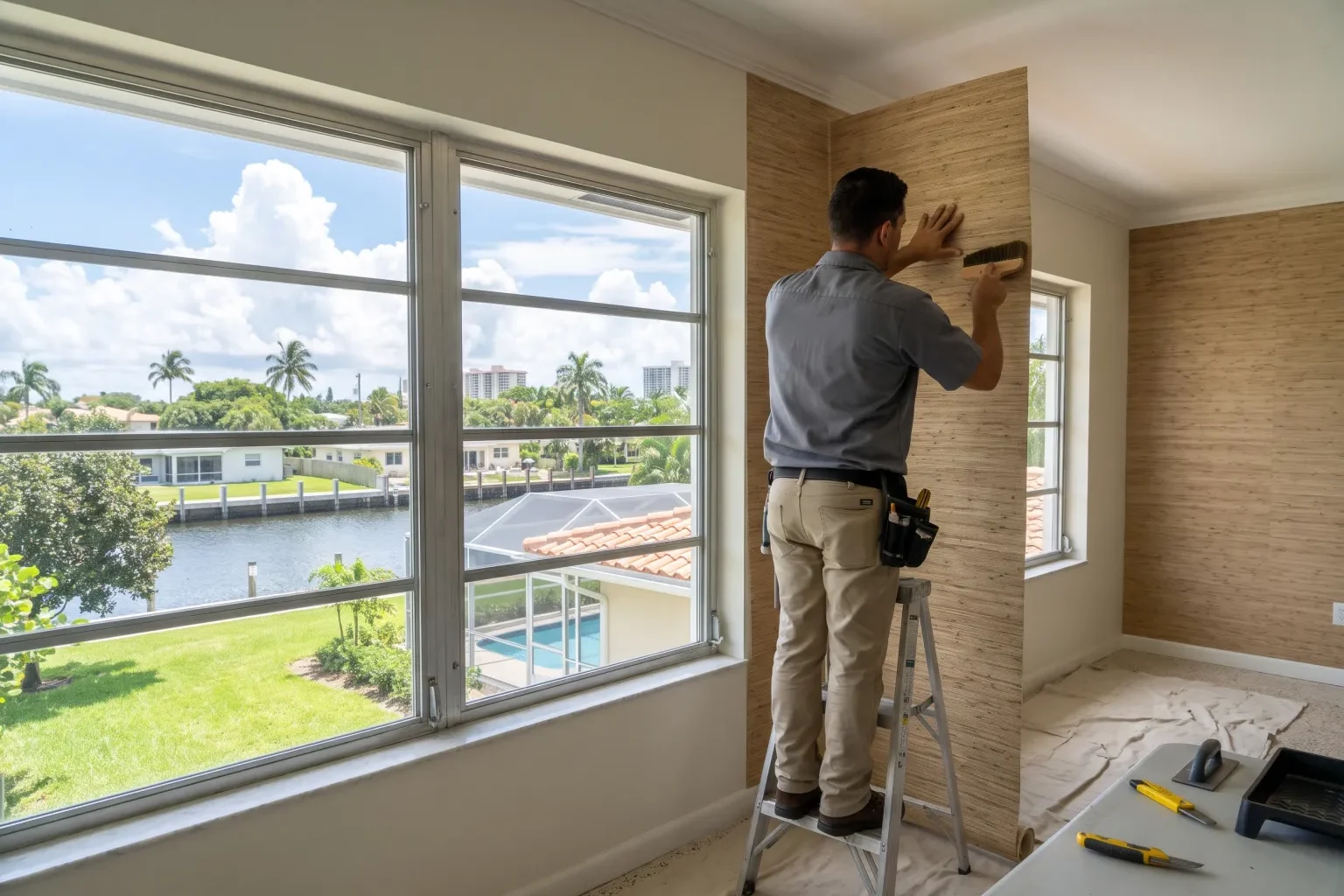
Grasscloth is woven from plant fibers such as sisal, jute, hemp or arrowroot and laminated to a paper backing. It brings texture that a printed paper can only imitate, and it behaves nothing like ordinary wallpaper once paste touches it. The fibers soak up moisture, stain if adhesive reaches the face, and shift in color from one bolt to the next. Creative Wallpaper Installer hangs grasscloth for homeowners in Pompano Beach and the surrounding Broward and Palm Beach communities, and this page explains how we approach it: which rooms suit the material, how the walls get ready, how each strip goes up, what drives the scope of a project, and what living with natural fiber walls looks like in a humid coastal climate.
Rooms Where Natural Fiber Makes Sense
Grasscloth rewards rooms where people sit, read, sleep or entertain. A feature wall behind a bed, a study lined floor to ceiling, or a dining room with soft evening light shows off the weave well. The material also hides minor wall texture better than flat paper, which helps in older ranch homes where the drywall or plaster has a few honest waves.
It is a poor fit for full bathrooms, laundry rooms, kitchen backsplash zones and hallways where kids drag backpacks along the wall. Splashes leave water rings that cannot be washed out, and fibers fray where they get rubbed. In South Florida we also look at sun exposure. A west-facing room with large sliders near the Intracoastal can fade natural dyes over time, so we may suggest a lighter colorway, window film or a vinyl grasscloth look-alike for that wall instead.
- Good candidates: living rooms, primary bedrooms, home offices, dining rooms, closets and powder rooms with a working exhaust fan
- Use caution: rooms with strong afternoon sun or poor air circulation
- Usually skip: showers, tub surrounds, laundry areas and busy mudroom walls
Getting the Wall Ready Before Any Fiber Goes Up
Grasscloth is thin enough that its backing telegraphs whatever sits underneath. Nail pops, patched holes and old paint ridges can show through as bumps once light rakes across the weave. We start by checking the surface with a work light held flat to the wall, then fill, sand and spot prime anything that catches a shadow.
Color matters too. Many grasscloths are loosely woven, so the wall behind them peeks through the gaps. A dark accent paint or a patchy primer can change the look of a pale sisal. We roll on a pigmented wallcovering primer tinted close to the paper's base tone so the weave reads evenly.
Moisture is the other concern. Concrete block exterior walls in coastal homes can hold dampness, and a fiber wallcovering pressed against a damp surface may develop mildew behind the backing. Before we hang on an exterior wall, we test with a moisture meter and look for signs of past leaks around windows, especially after a stormy summer. If readings are high, we pause until the source is solved rather than covering it up.
How We Hang Grasscloth, Strip by Strip
The process is slower and more deliberate than hanging a printed paper. Every step aims to protect the face of the material and to manage how the seams look.
- Inspect every bolt first. We unroll each bolt in daylight, check that the run numbers match, and sort them so neighboring strips have the closest possible color. Natural fibers vary, and that shading is part of the product, but sorting keeps the jumps gentle.
- Measure and plan the layout. We map strip widths around the room so narrow slivers do not land beside a door frame or at the center of a feature wall. Seams fall where the eye expects them, often lined up with a window edge or the middle of a bed.
- Decide on direction. Many grasscloths are reverse hung, meaning every other strip is flipped top to bottom. This reduces the contrast where the edges meet. We confirm the manufacturer's instruction for each pattern before cutting.
- Cut with a fresh blade. Fibers snag on a dull edge, so we change blades constantly and cut on a straightedge rather than freehand.
- Paste the back only. We use the adhesive the maker recommends, apply it evenly with a roller, and book the strip for the time printed on the label. Not a drop is allowed to reach the face.
- Set and smooth with a soft tool. A clean brush or roller presses the strip in place without crushing the weave. We never wipe the surface with a wet sponge the way we would on vinyl.
- Trim at ceiling, baseboard and outlets. Edges are cut on a guide so they stay straight, and cover plates go back on once everything is dry.
What Shapes the Scope of a Grasscloth Project
Because each house and each product is different, we quote after seeing the room and the material. Several factors change how much time and labor a job takes.
Wall condition comes first. A smooth, recently painted wall needs little more than primer, while a wall with old wallpaper residue, texture or water damage may need skim coating. The grade of grasscloth also matters, since thin, loosely woven papers and fragile fibers like arrowroot demand more care than a sturdy sisal. Products with a printed pattern on top of the weave have a repeat that must be matched, which adds waste and time. Room size, the number of windows and doors to cut around, and ceiling height all play in, and tall great rooms or stairwells require scaffolding or planks to work safely.
Living With Grasscloth in a Humid Climate
Once the walls are up, give them a few days of steady air conditioning so the paste cures evenly. Our wet season, roughly May through October, brings heavy humidity, and a room left closed with the AC off can let moisture creep into the fibers. Keeping the thermostat running at a stable setting is one of the simplest ways to protect the wall.
For routine care, dust with a soft brush attachment on a vacuum or a dry microfiber cloth. Do not spray cleaners or scrub. If something spills, blot right away with a dry towel and call us before trying any treatment. Keep furniture an inch or two off the wall so chairs and headboards do not rub the weave, and close blinds during the strongest afternoon sun on exposed walls. When hurricane season arrives in June, it is worth checking that windows near the grasscloth stay sealed, since wind-driven rain is the most common source of the stains we are asked to repair.
Grasscloth Wallpaper Installation by city
- Grasscloth Wallpaper Installation in Lighthouse PointLocal service & repairs
- Grasscloth Wallpaper Installation in Hillsboro BeachLocal service & repairs
- Grasscloth Wallpaper Installation in Deerfield BeachLocal service & repairs
- Grasscloth Wallpaper Installation in Coconut CreekLocal service & repairs
- Grasscloth Wallpaper Installation in Boca RatonLocal service & repairs
- Grasscloth Wallpaper Installation in Lauderdale-by-the-SeaLocal service & repairs
- Grasscloth Wallpaper Installation in MargateLocal service & repairs
- Grasscloth Wallpaper Installation in Oakland ParkLocal service & repairs
- Grasscloth Wallpaper Installation in Highland BeachLocal service & repairs
- Grasscloth Wallpaper Installation in North LauderdaleLocal service & repairs
- Grasscloth Wallpaper Installation in Wilton ManorsLocal service & repairs
- Grasscloth Wallpaper Installation in ParklandLocal service & repairs